

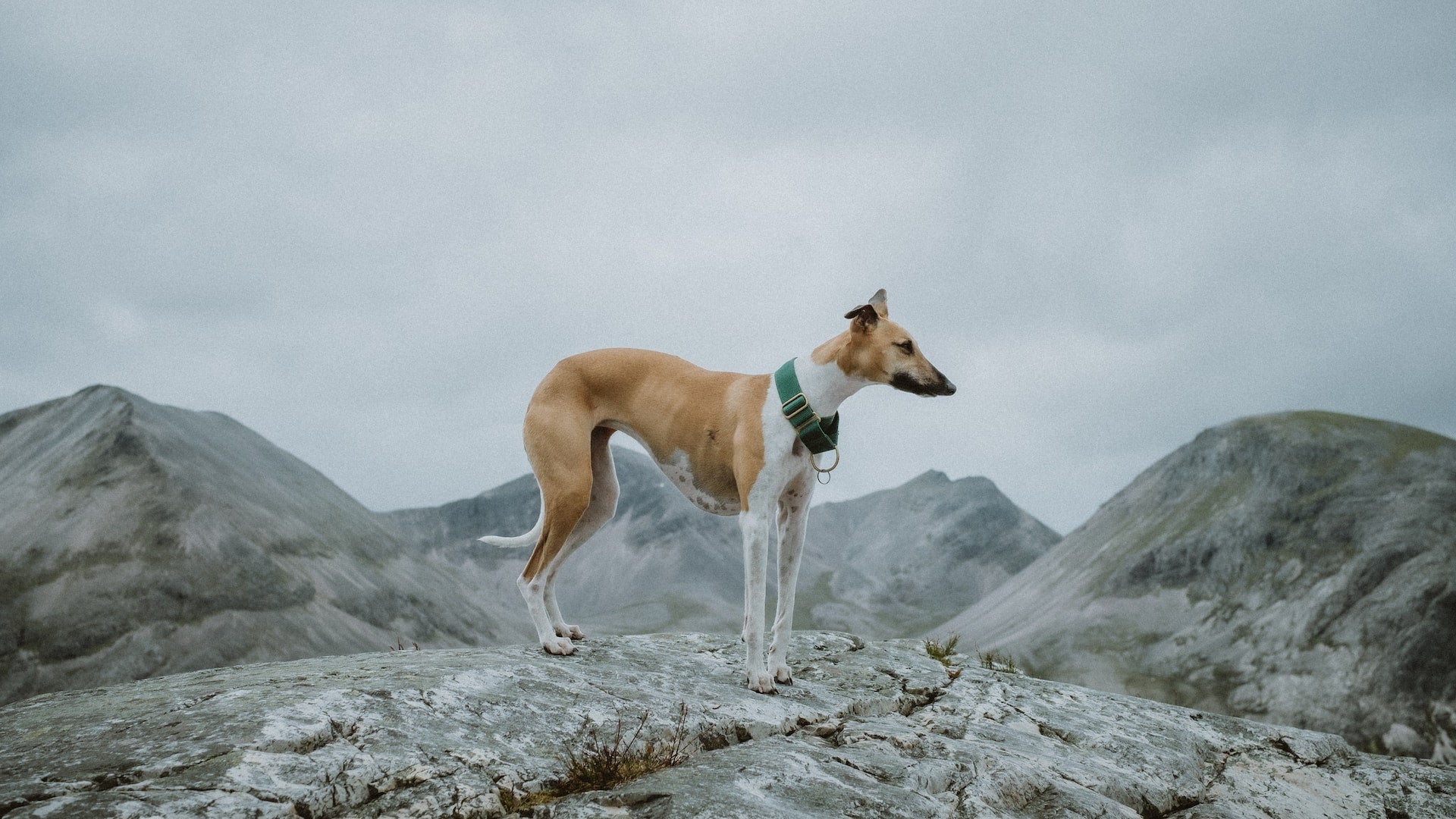
The Whippet is an easy-to-care-for and fast dog with an elegant appearance. Are you wondering if the Whippet is the right dog breed for you? We explain what characterizes its personality, activity level and health, as well as what you should think about in your everyday life as a Whippet owner.
Quick facts

Family friendly

Activity level

Fur care

Training needs

Clearing
Size
Facts about the breed
The Whippet is the most common sighthound in Norway and was bred for racing and hare hunting around the 18th century. In the Victorian period in England, it was called "the poor man's racehorse" as it was much cheaper to feed than the large Greyhound, and required less space than a racehorse. It is believed that the Whippet was bred by using various terrier breeds and small Greyhounds.
What can you expect as a whippet owner?
Personality
Personality
The Whippet is a good first dog as it is low-maintenance and relatively easy to handle. Personality-wise, it is a friendly and affectionate companion dog and is well-suited as a family dog or for dog sports like lure coursing. Whippets don't like to be alone but love to cuddle and be part of a pack, so they are happy living with other dogs of the same breed. Whippets are known for being calm, kind, and barking very little, as they also dislike noise and commotion themselves. They get along well with children and are known to retreat rather than defend themselves if they experience an uncomfortable situation. This depends somewhat on the individual dog, so remember that young children should never be left alone with dogs.
Activity level
Activity level
By nature, whippets are fantastic sprinters. If it gets its daily walks and the opportunity to sprint outdoors a couple of times a week, if not daily, it will live a harmonious life. Activities such as throwing a ball, frisbee, or running freely in dog parks are a great way for your whippet to expend energy. Whippets still have a strong hunting instinct, so be careful if it runs freely in the woods. If it spots something interesting, like a small animal, it will quickly disappear after it. Coursing, where the dog chases prey until it collapses from exhaustion, is prohibited in Norway.
Indoors, whippets are somewhat passive as they conserve energy for fast sprints. Although a whippet is muscular, it is not suitable as a sled dog or for heavy loads.
Training
Training
The Whippet is relatively easy to train, but some people find that it has little interest in learning new things. It is important to be consistent and use positive reinforcement such as treats as they love food.
Health
Health
Weight and size
A male Whippet is between 47 and 51 cm tall, while females are between 44 and 47 cm tall. Both sexes weigh between 11-20 kg, with females being slightly lighter.
Lifespan
12-15 years
Hereditary diseases
It is common for some dog breeds to be more prone to hereditary diseases than others. Whippets have very few hereditary diseases and are generally exceptionally healthy. Cardiac arrhythmia is quite common, but it rarely causes problems for your Whippet. Cryptorchidism (undescended testicle) can also occur.
Fur
Fur
The coat of a whippet is fine, short and dense. It comes in many color combinations and requires little care. The whippet sheds little and in winter it must wear paw socks, clothes or a blanket to keep from freezing.
Food and nutrition
Food and nutrition
When choosing food for a Whippet, you should choose a type of food that is adapted to the specific health of the dog. Whippets tend to become overweight, and this can be very stressful on their bones and joints.
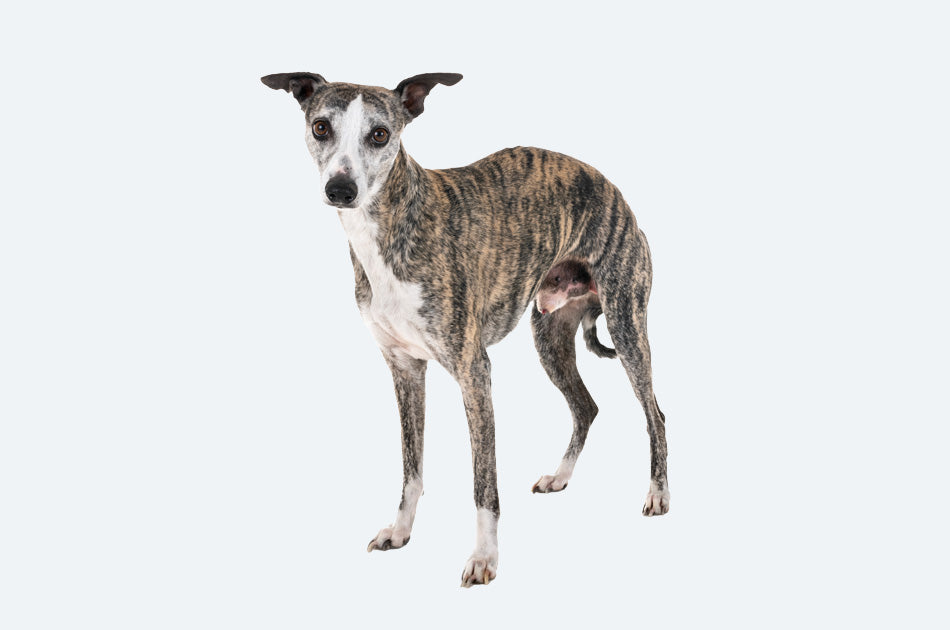
Whippet
If you wish to become the owner of a Whippet, you should make sure to find a reputable breeder. The cost of a Whippet will vary, but you can expect the price for a Whippet to be approximately 15,000 to 18,000 NOK.
It is important to choose a seller who provides information on how the dog was bred, to ensure that you are not contributing to uncontrolled or illegal dog trading. Unfortunately, not all breeders operate in a responsible and proper manner, which can lead to serious illnesses in the puppies. Being well-prepared and finding a reliable breeder is therefore best for both you and the dog.
Anbefalt neste steg
Nyttig til hunden du vurderer
Når du har funnet en rase som passer livsstilen din, er neste steg å se på fôr, utstyr og hverdagsprodukter som gjør hundelivet enklere.